

Track | Store | Protect
Unlocking vault
Firearm Vault · kalixapp.com
Track | Store | Protect
Unlocking vault
Firearm Vault · kalixapp.com
Everything Kalix Does
Most firearm inventory apps are glorified counters: tap to increment, tap to decrement, and hope you remember why. Kalix ties every ammo box, every document, and every range session back to the exact firearm it belongs to, and it doesn't put an arbitrary ceiling on how far you want to take it.
Below is everything the app actually does today, feature by feature, with a real scenario for each one. Nothing you have to work around.
The Difference
A range gun and a duty gun don't live the same life, and a firearm's paperwork isn't separate from the firearm itself. Most inventory apps never make that connection. Kalix was built around it from day one.
Feature By Feature
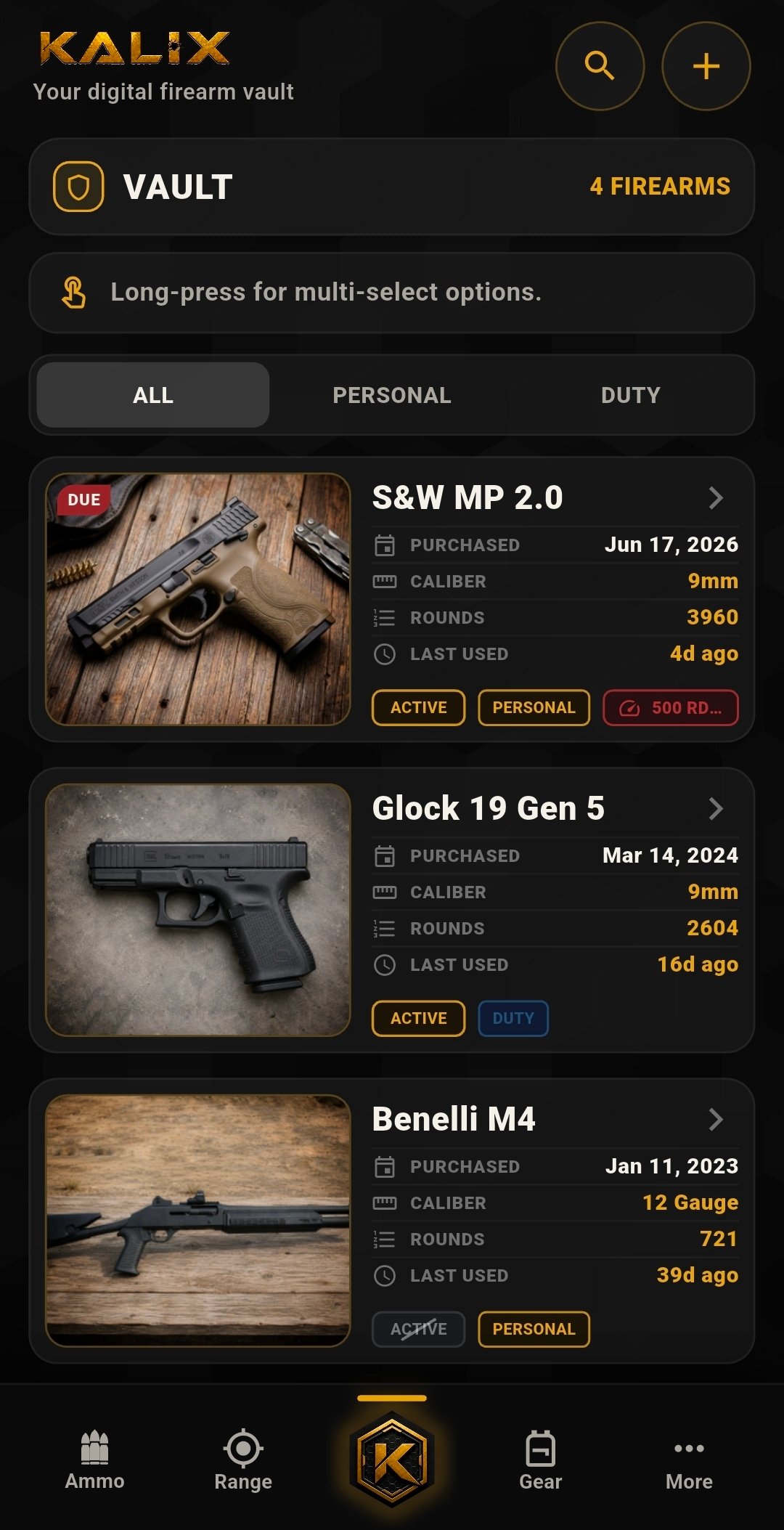
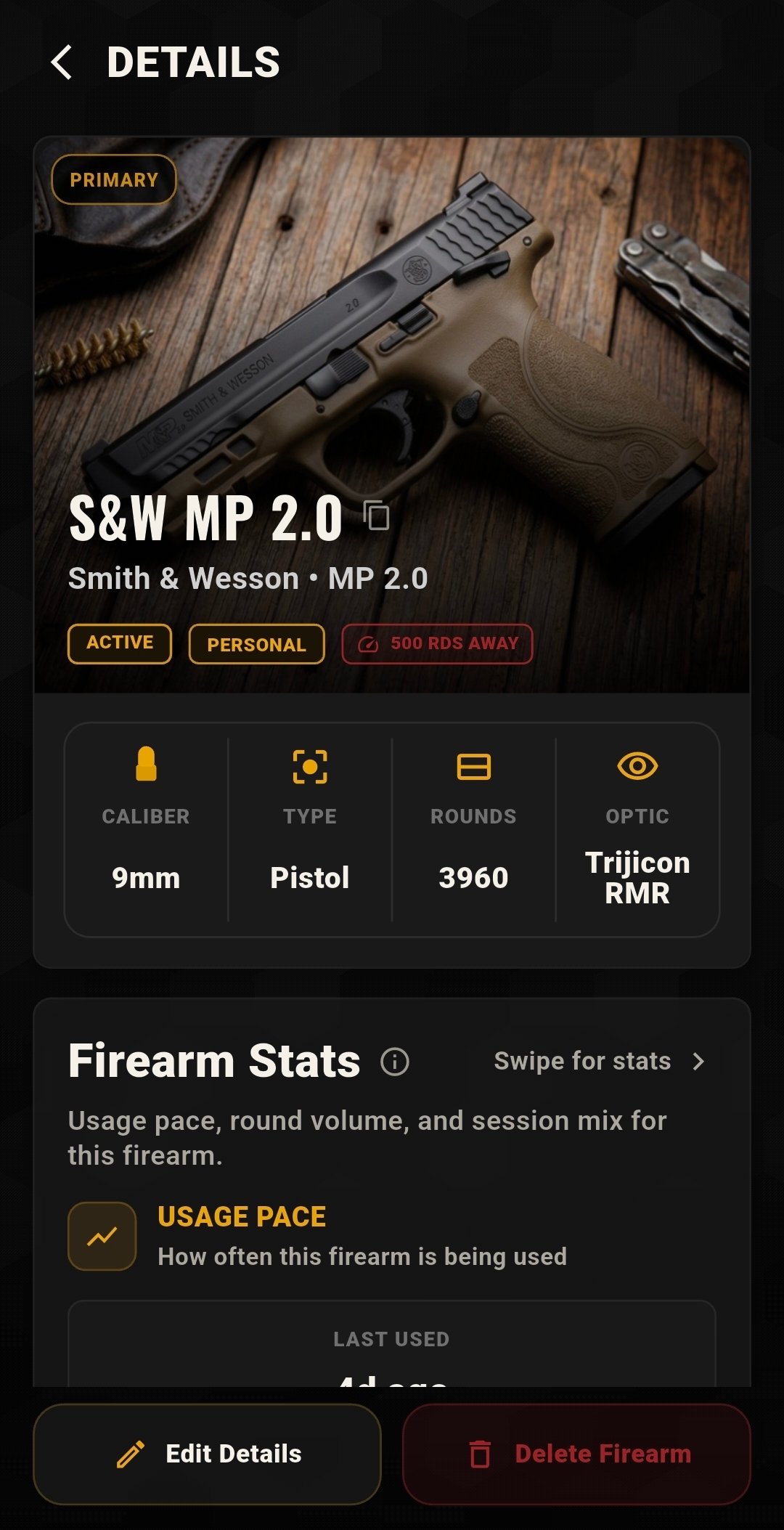
Every firearm gets its own record: caliber, optic, purchase date, rounds fired, and a live Active or Inactive status, classified as Personal or Duty the moment you add it. That split isn't cosmetic. It runs through search, filters, alerts, and reminders everywhere in the app.
In practice
You've got a home-defense shotgun and three range guns in the same vault. Kalix doesn't let them get treated the same: the shotgun surfaces maintenance and readiness front and center, while your range guns just track what you actually shoot for fun.
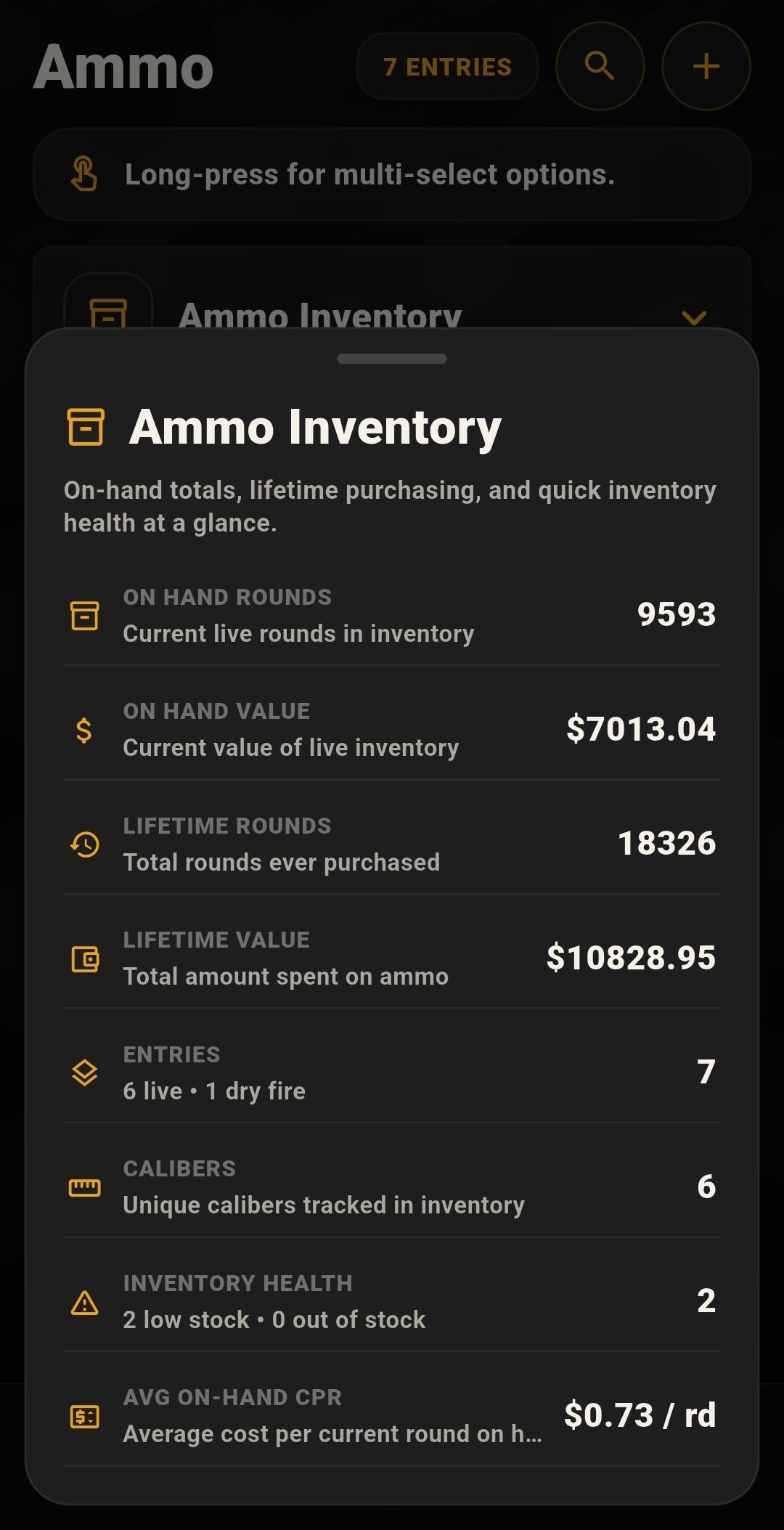
Every box you log rolls up into one running inventory: rounds on hand, dollar value, cost per round, and automatic low-stock warnings, broken out by caliber and brand, with full stock history for every add, use, and adjustment.
In practice
You reach for your 9mm before a range trip. Kalix already knows you're down to ten rounds of Blazer 9mm and flags it low stock before you're standing at the counter trying to remember what you have at home.
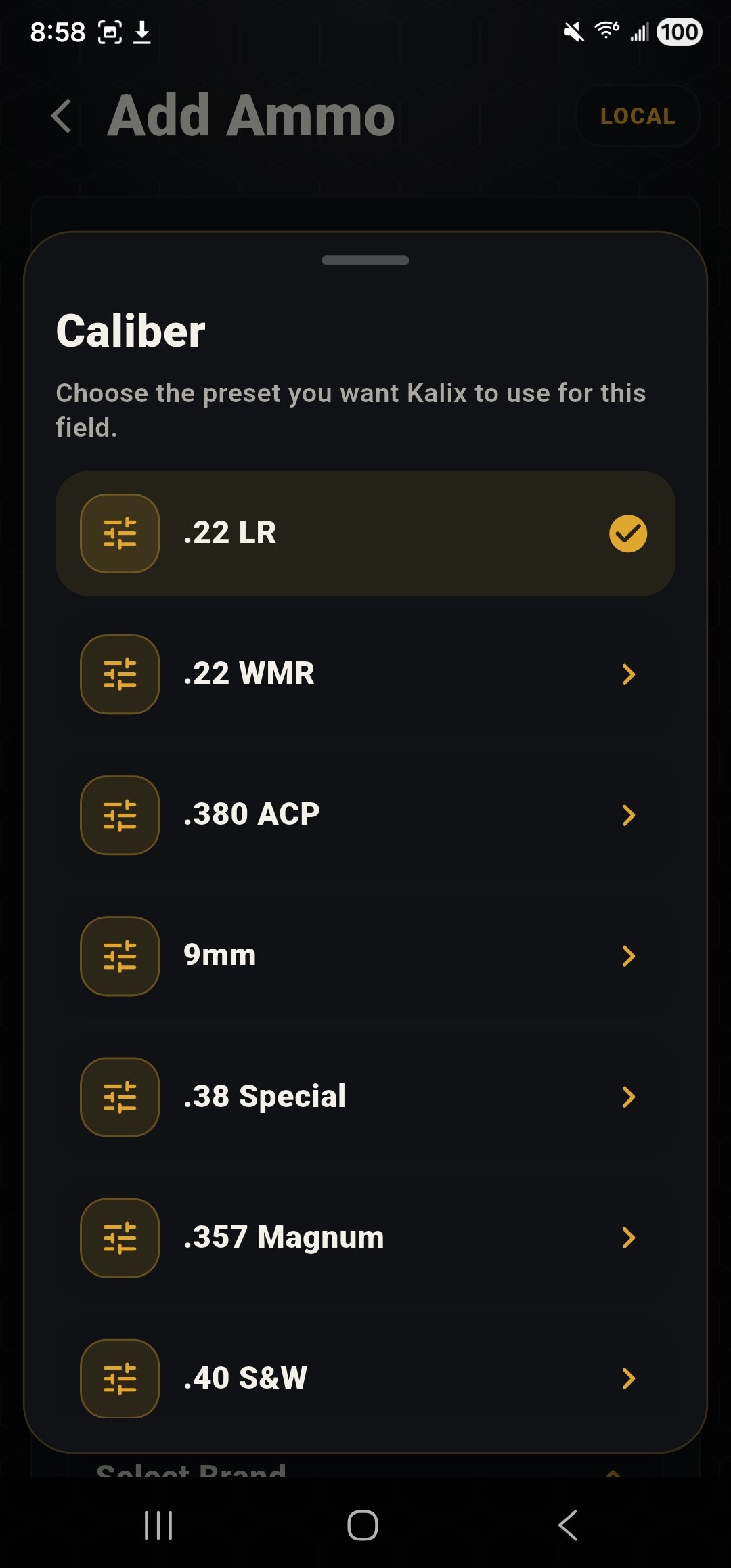
This is the detail most inventory apps miss entirely. When you log a Live Range session for a specific firearm, Kalix already knows what it chambers. The ammo picker filters itself down to the calibers that firearm can actually run, instead of making you scroll past ammunition for six other guns you own.
In practice
Log a range trip for your .357 revolver and the ammo list shows .357 Magnum, not eleven irrelevant calibers from the rest of your vault. Pick, log, done.
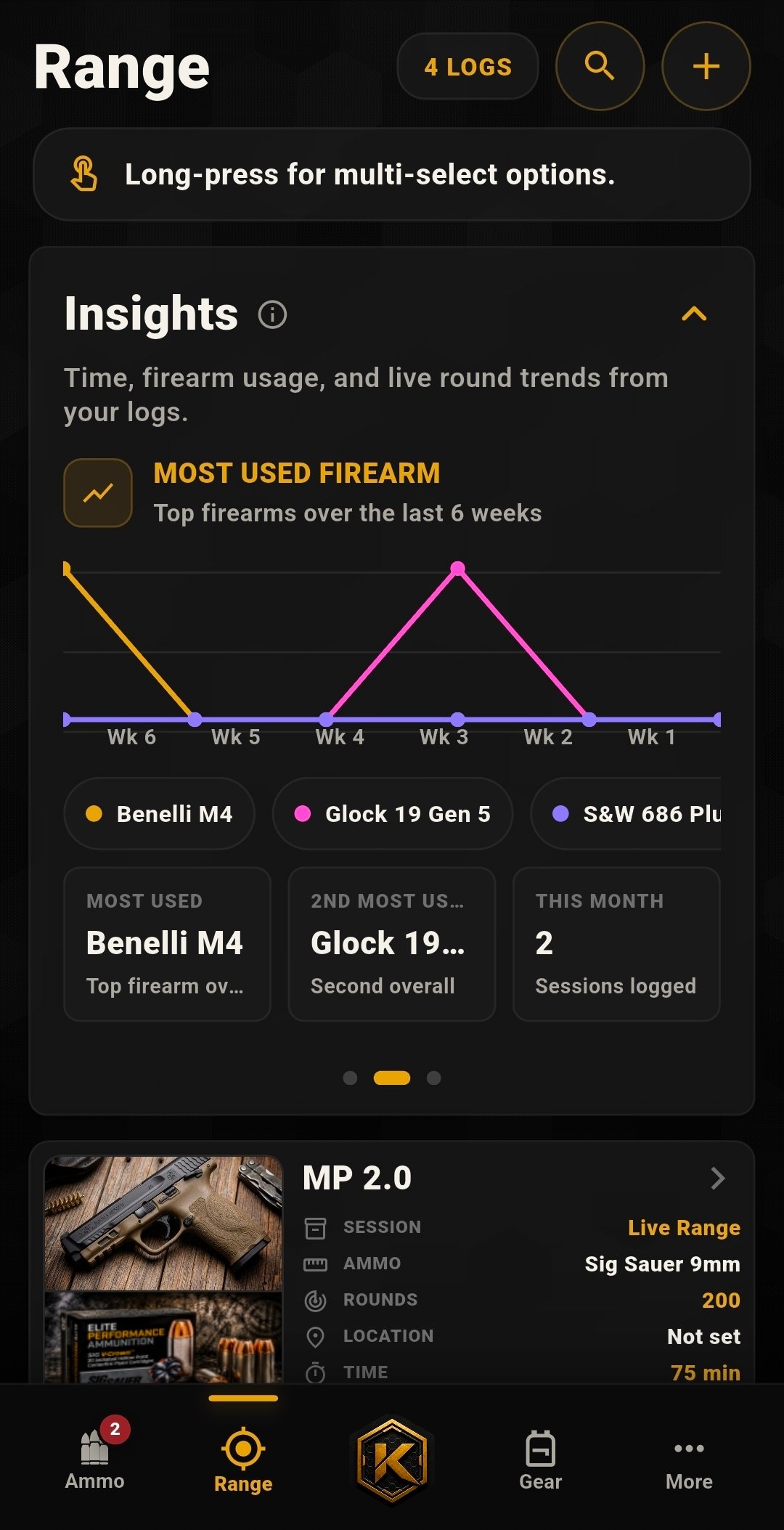
Every range trip logs against the exact firearm and exact ammo used, with rounds fired, duration, location, and weather. Insights turn that history into real trends: top calibers used, most-used firearm over the last six weeks, and your ammo burn rate week over week.
In practice
Six weeks in, Insights shows your Benelli M4 as your most-used firearm two weeks running, and your 12 Gauge burning faster than you're restocking it. You notice the pattern without building a spreadsheet to find it.
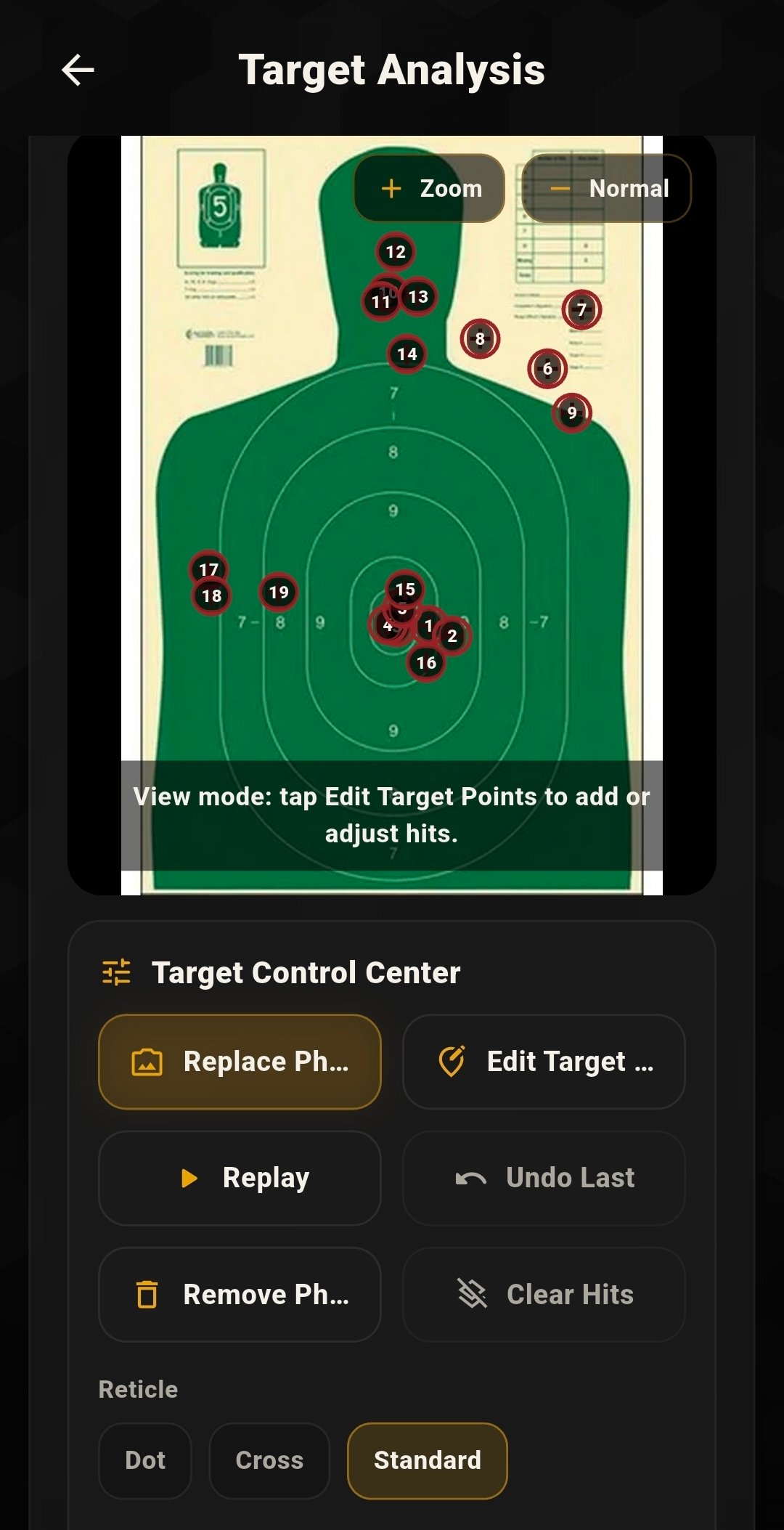
Attach a photo of your target, tap to mark every hit, and Kalix builds the shot-group breakdown automatically: distance, group size, and a full replay of where every round landed, tied back to the session that produced it.
In practice
Instead of a blurry target photo buried in your camera roll, you've got an actual analysis of your group, permanently attached to the exact firearm and ammo that shot it.
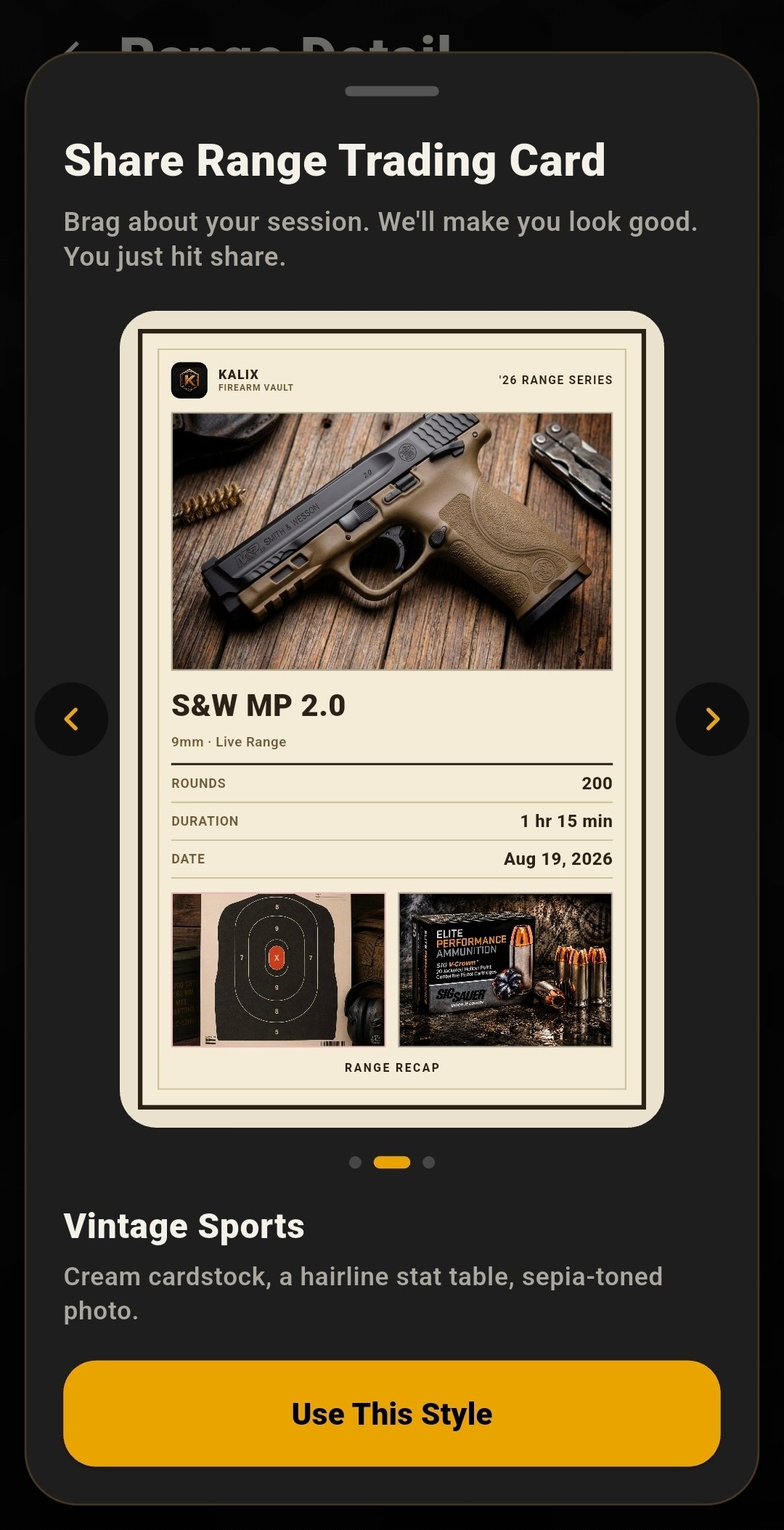
Any range session can turn into a styled trading card: your firearm, the group, the numbers, ready to share, with no screenshot cropping or manual formatting.
In practice
Personal best group at fifteen yards. One tap turns the session into a card you can actually send to the group chat instead of trying to explain it in a paragraph of text.
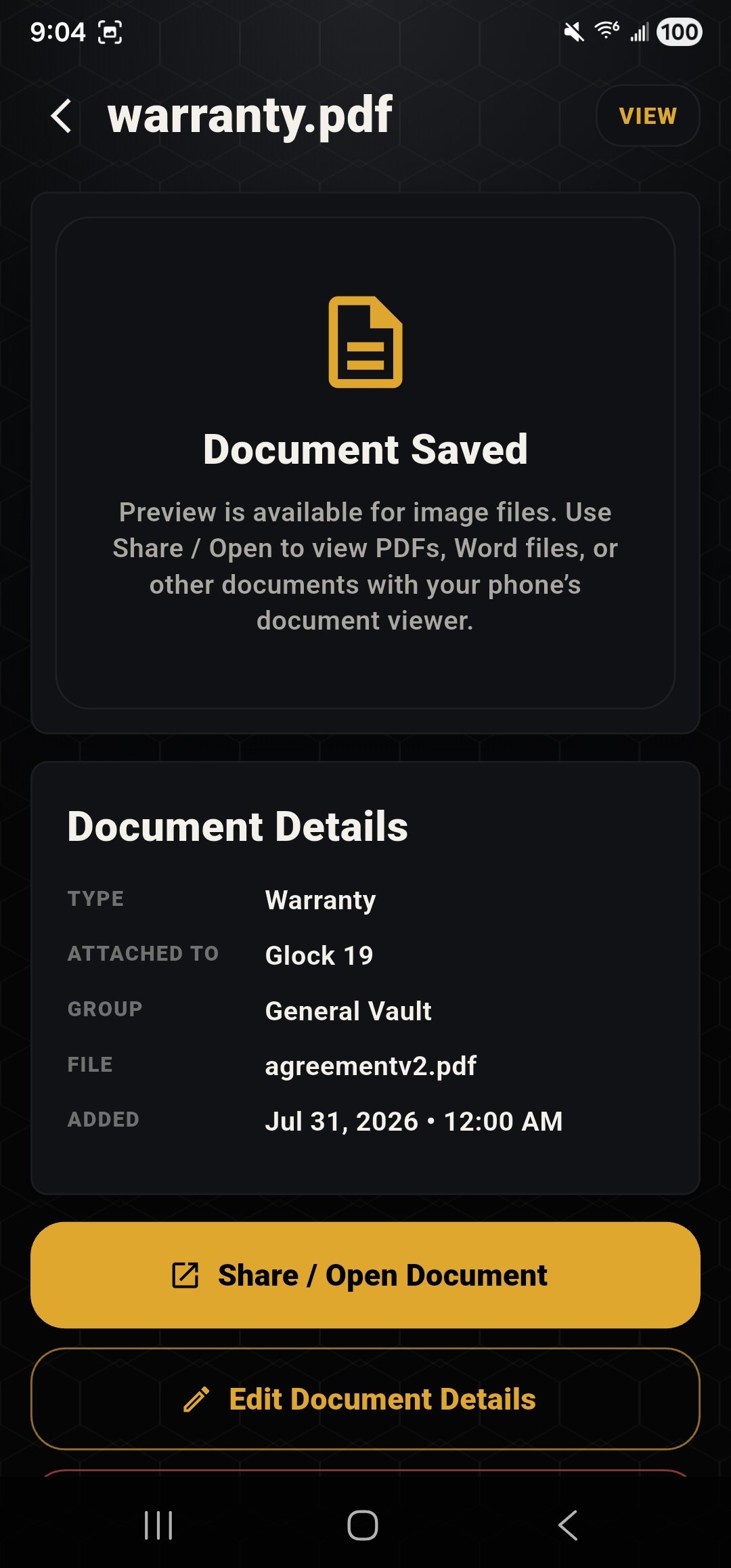
This is the one almost nobody else does right. Bills of sale, warranty cards, FFL transfer paperwork, agency issue forms, manuals: every document attaches to the exact firearm it belongs to, not a generic folder you have to remember the context for later.
In practice
A duty pistol's manufacturer warranty is about to expire and the original agency issue form needs to be pulled for a records request. Both live inside that firearm's own record. Nothing to dig for.
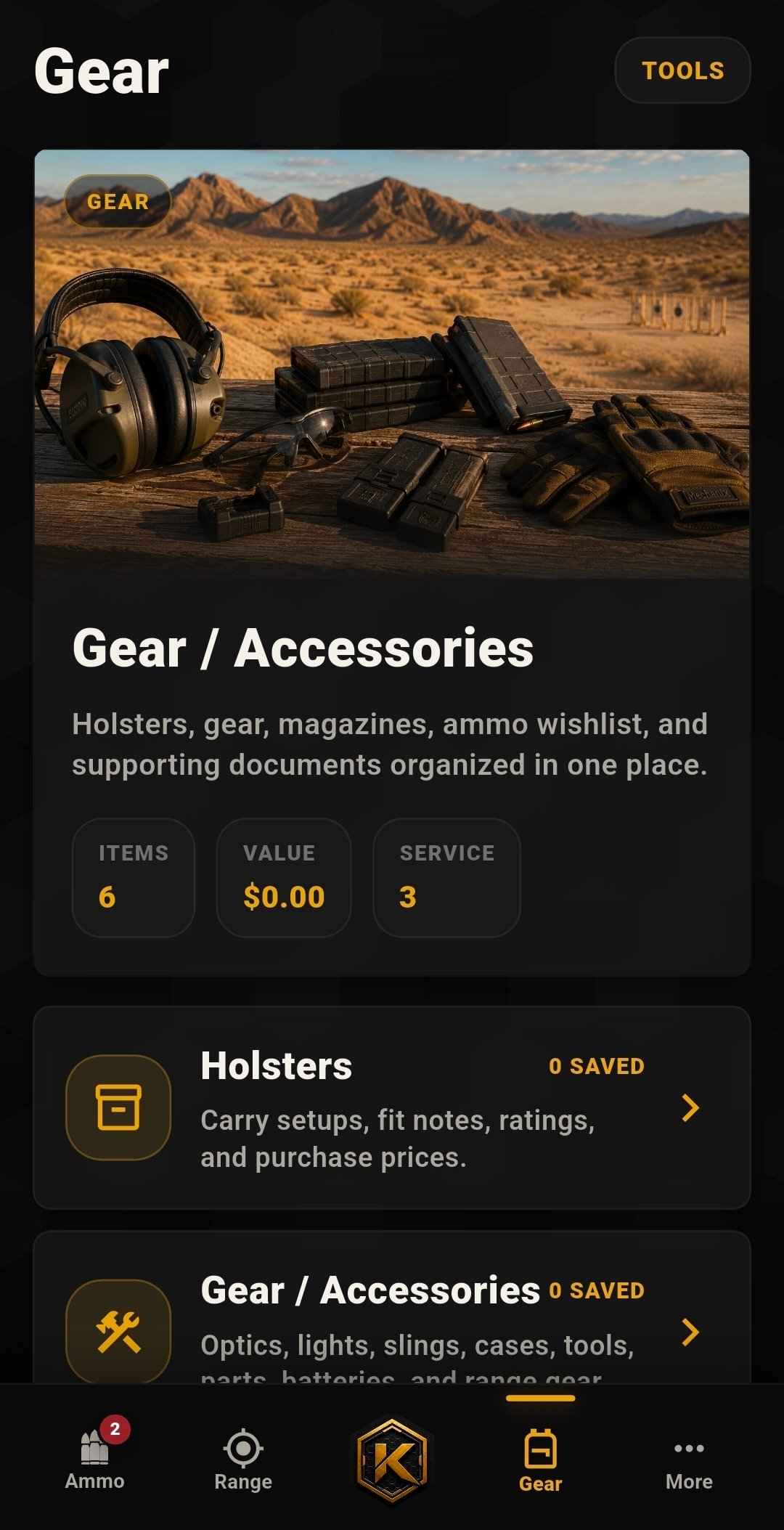
Holsters, optics, slings, cases, and other gear track right alongside the firearms they belong to, with fit notes, ratings, and purchase prices included.
In practice
Deciding whether to buy a second holster for a gun you already own two for? Kalix already has your notes on how the first two actually fit.
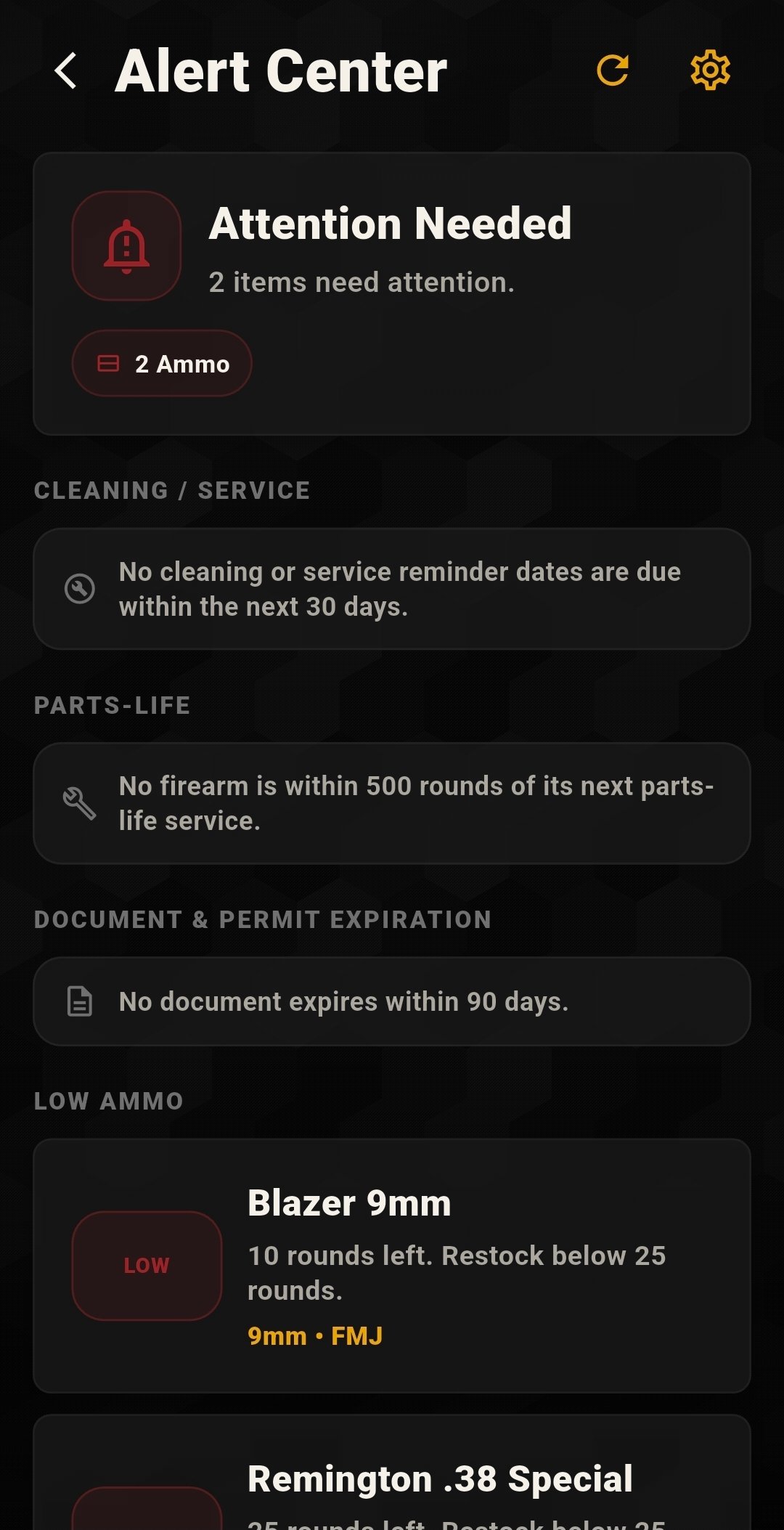
Low ammo thresholds, cleaning and service lookahead, document expiration, and planned-session reminders, all tuned by you, and all aware that a Duty firearm carries more urgency than a range toy.
In practice
A duty sidearm's cleaning is overdue and Kalix surfaces it above a low-stock notice for ammo you rarely shoot. It knows which one actually matters right now.
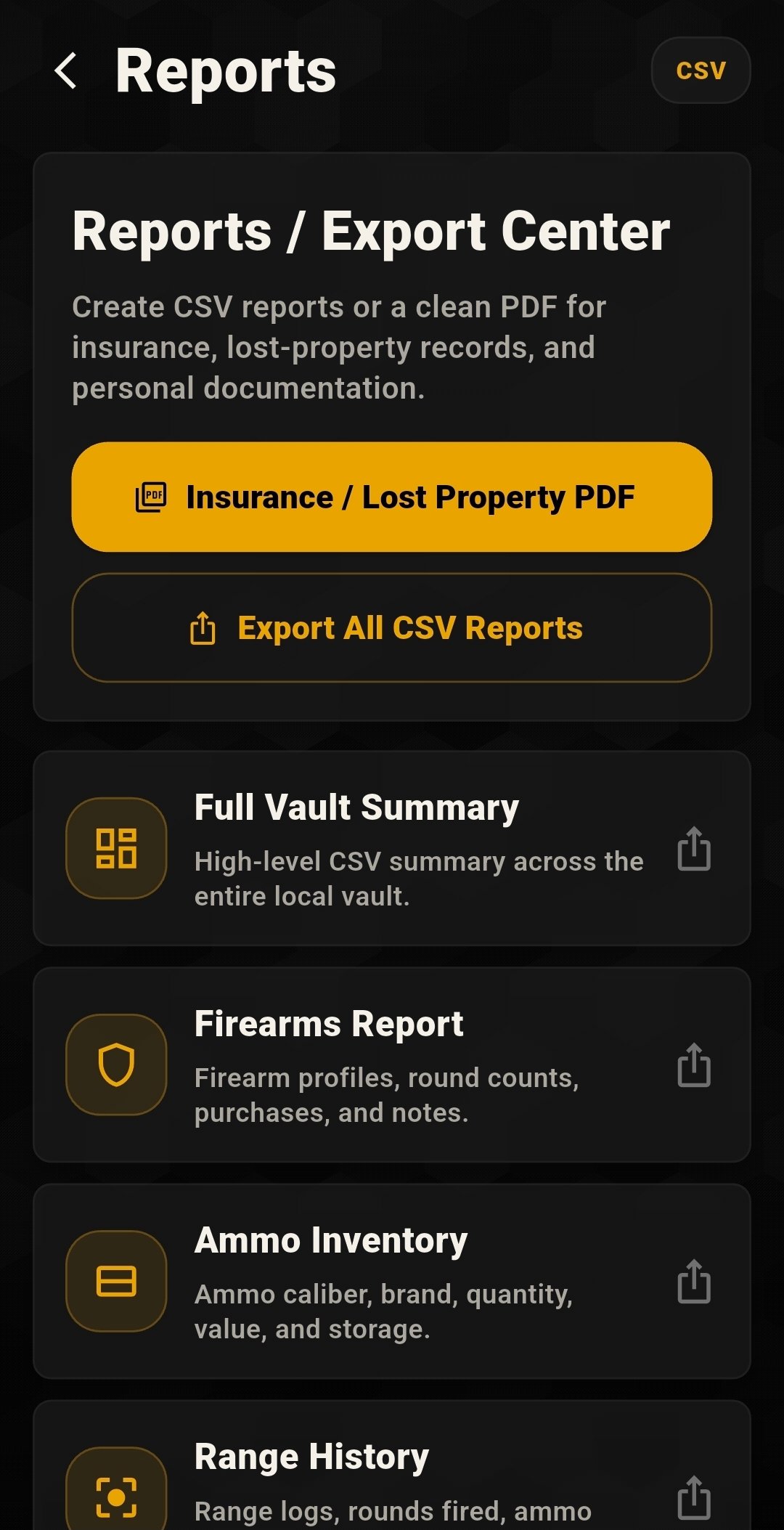
Export a clean PDF for insurance or lost-property records, generate CSV reports for your full vault, ammo, range history, or investment totals, and create a local ZIP backup on demand. Nothing routes through a Kalix server, because there isn't one.
In practice
An insurance agent asks for a current inventory list. A PDF summary exports in about ten seconds, no cloud account, no waiting on a server that doesn't exist.
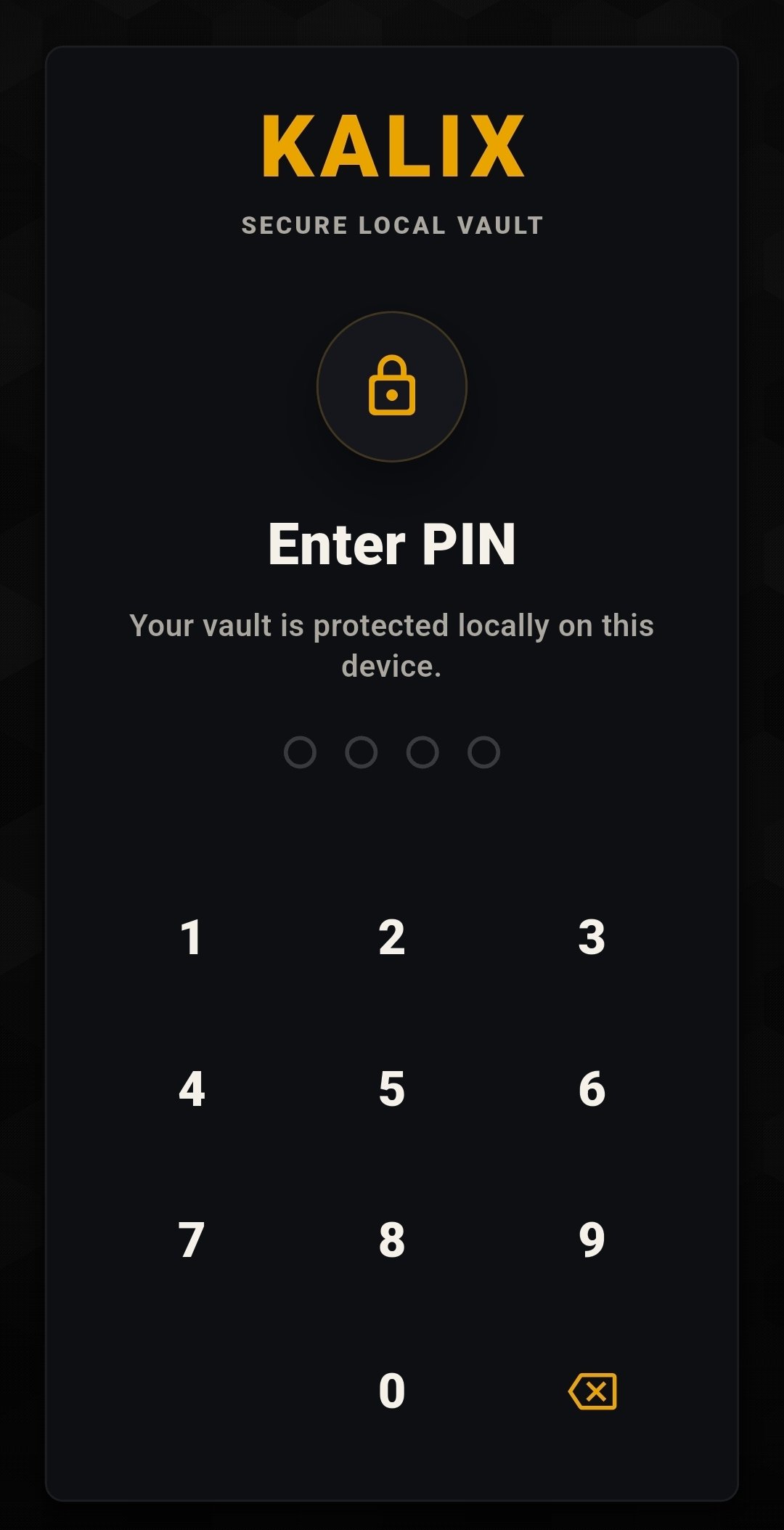
Lock the vault behind a PIN, and know that the underlying data never had anywhere to leak from in the first place. Local-first isn't a fallback mode. It's the entire architecture.
In practice
Someone picks up your unlocked phone. Your firearm inventory isn't one tap away, and it was never sitting on a server somewhere to begin with.
Built Different
Kalix isn't a website stuffed into an app shell. It was built meticulously from the ground up in Dart and Flutter as a genuine native mobile application, which is why screens transition smoothly, long lists scroll without stutter, and the interface feels like software instead of a rendered webpage.
Every screen, card radius, chip, and transition was iterated on by hand until it felt right, not shipped from a generic template and left alone. That level of care shows up in the small things: the vault list doesn't jank scrolling past fifty firearms, and moving from Vault to Firearm Details doesn't feel like a page reload.
Ready
Kalix is now available on both the Google Play Store and the Apple App Store.